Understanding LGBTQIA+ Flags and Symbols
- shoplgbtlgbtqia
- 29 mars 2023
- 2 min de lecture
Understanding LGBTQIA+ Flags and Symbols
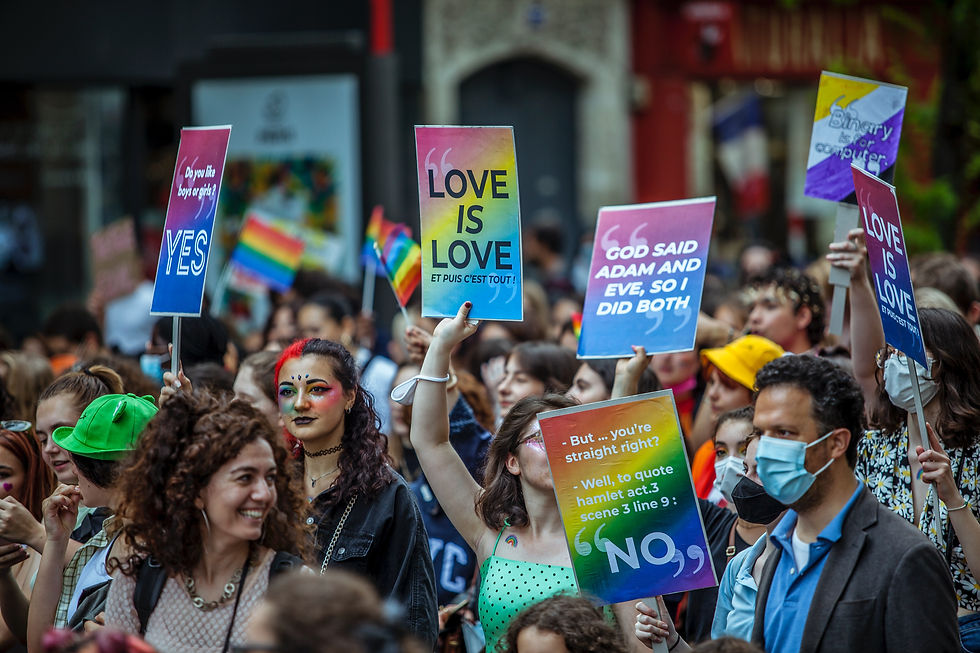
The LGBTQIA+ community is a diverse group of people who share a common goal of promoting and advocating for the rights of individuals who identify as non-heterosexual and non-cisgender. One of the ways that the community showcases its diversity is through the use of various flags and symbols. In this article, we will explore some of the most popular LGBTQIA+ flags and symbols and what they represent.

The Rainbow Flag
The most well-known symbol of the LGBTQIA+ community is the rainbow flag. It was first created in 1978 by Gilbert Baker, an openly gay artist and activist. The flag features six colors: red, orange, yellow, green, blue, and purple. Each color represents a different aspect of the LGBTQIA+ community. For example, red represents life, while purple represents spirit.
The Transgender Pride Flag
The transgender pride flag was created in 1999 by Monica Helms, a transgender woman, activist, and Navy veteran. The flag features five stripes: two light blue, two pink, and one white in the center. The stripes represent the traditional colors associated with baby boys (blue) and girls (pink), with the white stripe representing those who are intersex, transitioning, or have a neutral or undefined gender identity.
read also : What is Gay Pride ?
The Bisexual Pride Flag
The bisexual pride flag was created in 1998 by Michael Page, a bisexual activist from Oregon. The flag features three stripes: pink, purple, and blue. The pink stripe represents same-gender attraction, the blue stripe represents opposite-gender attraction, and the purple stripe represents a combination of the two.
The Asexual Pride Flag
The asexual pride flag was created in 2010 by AVEN, the Asexual Visibility and Education Network. The flag features four stripes: black, grey, white, and purple. The black stripe represents asexuality, the grey stripe represents grey-asexuality and demisexuality, the white stripe represents sexuality, and the purple stripe represents the community as a whole.
The Nonbinary Pride Flag
The nonbinary pride flag was created in 2014 by Kye Rowan, a nonbinary graphic designer. The flag features four stripes: yellow, white, purple, and black. The yellow stripe represents those who identify outside the gender binary, the white stripe represents those who identify as having multiple genders, the purple stripe represents those who feel their gender is a combination of male and female, and the black stripe represents those who identify as being without gender.
In conclusion, the LGBTQIA+ community uses a variety of flags and symbols to represent its diversity and promote acceptance and equality. While there are many different flags and symbols, each one serves a unique purpose in promoting visibility and recognition for various groups within the community. We hope this article has provided you with a better understanding of some of the most popular LGBTQIA+ flags and symbols.
OTHERS LINKS :
Different LGBTQ flags and meaning
Understanding LGBTQIA+ Terminology


Commentaires